Why Handleless Kitchens Work Well in Open-Plan Homes
Handleless kitchens suit open-plan homes because they eliminate visual interruptions across a shared living space, facilitate easier movement between zones, and make the kitchen feel like part of the room rather than a separate functional area. True handleless systems, which use a recessed rail profile behind each door and drawer front, deliver this more completely than push-to-open alternatives.
Open-plan living has changed the way kitchens need to look and perform. When cooking, dining and relaxing happen in one connected space, the kitchen is always on show. Every design decision reads differently when there are no walls to separate it from the rest of the room.
That is one reason handleless kitchens have become a natural fit for this kind of layout. The absence of protruding handles creates a clean, unbroken run of cabinetry that works with an open-plan space rather than against it.
What Makes a Handleless Kitchen Different
A handleless kitchen removes visible handles entirely, replacing them with either a recessed rail system, a J-pull groove cut into the door edge, or a push-to-open mechanism. Each approach produces a similar look from a distance, but they work differently in practice and suit different priorities.
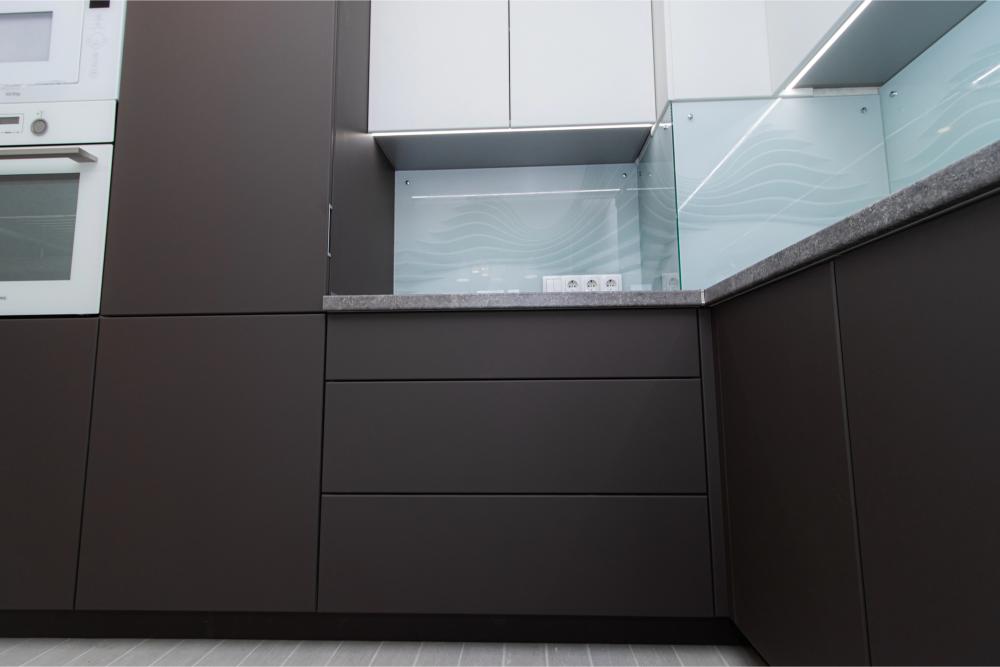
In a true handleless kitchen, the door and drawer fronts are manufactured around 30 mm shorter in height than standard. A continuous aluminium grip rail sits in the gap behind them, running the full width of each unit. You pull the door by reaching into the channel rather than gripping a surface-mounted handle. The result is a flush, uninterrupted cabinet face with no hardware breaking the line.
A J-pull door achieves a similar effect through a curved groove routed into the top or bottom edge of the door itself. There is no separate rail component. Push-to-open systems eliminate the need to grip, using a pressure-activated mechanism that releases the door when pressed.
Each type has its place, but for open-plan homes where visual continuity across a large shared space matters, true handleless systems are the most consistent solution.
How Handleless Design Improves Visual Flow in Shared Spaces
In an open-plan home, the kitchen sits within a wider visual field that includes the dining area, the sitting room and often a garden view. Every surface, line and detail contributes to how calm or busy the whole space feels.
Handleless cabinetry reduces visual clutter across that field. Where a traditionally handled kitchen features hardware at regular intervals along each run of units, a handleless kitchen offers an unbroken surface from one end to the other.
This matters more in open-plan homes than it might in a closed kitchen. As everyday clutter is far more noticeable when everything is on display, keeping the kitchen visually streamlined is genuinely useful rather than just aesthetically preferable.
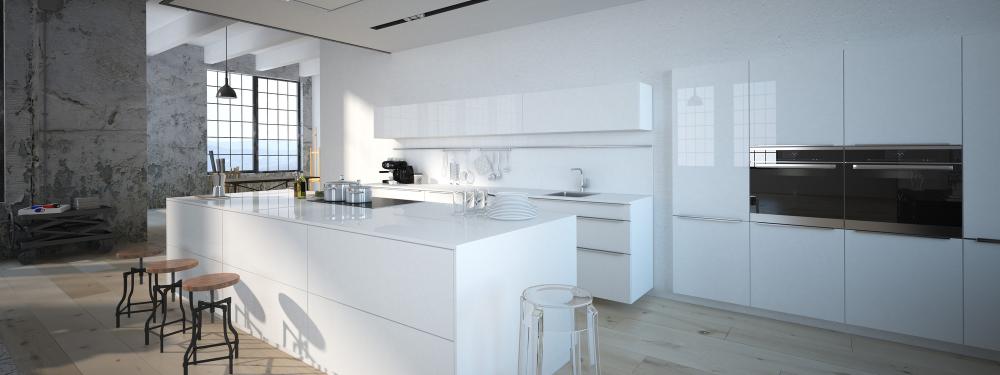
Integrated appliances extend this effect. When the dishwasher, fridge and oven doors are finished to match the cabinetry, the whole run reads as one surface. In a space where the kitchen is always visible, that coherence makes a meaningful difference to how settled the room feels.
Practical Benefits Beyond the Look
The visual case for handleless kitchens in open-plan homes is straightforward, but the practical advantages are just as relevant for day-to-day use.
Easier to clean
Without protruding handles, there are fewer surfaces to wipe around. Handleless cabinet fronts can be cleaned in a single motion from top to bottom. Matt and anti-fingerprint finishes, which are commonly paired with true handleless systems, reduce the frequency of cleaning needed without sacrificing the flat, smooth appearance.
Safer circulation
In a shared living space where people move between cooking, eating and relaxing, protruding handles are a genuine hazard. Children at hip height are particularly vulnerable. The flush profile of a handleless kitchen removes that risk, which is one reason families with young children often find the switch from a handled to a handleless kitchen more comfortable than they expected.
The fingerprint question
Fingerprints come up in almost every conversation about handleless kitchens. The honest answer is that high-gloss finishes in any style will show marks. Opting for a matt or textured finish largely resolves the problem, and most true handleless systems are available in a wide range of matt lacquers and anti-fingerprint laminates. The recessed rail on a true handleless system also means that hands contact the grip channel rather than the door face, reducing marks on the cabinet front.
Why Open-Plan Homes Specifically Benefit
Open-plan living presents specific challenges that affect how a kitchen should be designed and specified. Understanding these helps explain why handleless kitchens are particularly well-suited to this layout.
Noise and cooking smells travel easily in a space without internal walls. Sound builds quickly in a room shared for cooking, dining, and relaxing, and cooking smells spread throughout the area rather than staying contained near the hob.
Both are worth factoring into the specification; good extraction is as important as any design decision in an open-plan kitchen. Handleless cabinetry accommodates concealed extraction systems cleanly, maintaining the visual calm of the space while allowing a high-performance unit to sit behind a matching door panel.
Kitchen zoning is another consideration. In a large open-plan space, defining where the kitchen ends and the dining or living area begins helps the room function well. A kitchen island is one of the most effective ways to do this, and a handleless finish on an island creates a consistent visual line from the main run of units through to the social heart of the space.
If you are opening up your kitchen as part of a wider renovation, fire safety is worth understanding early. The Local Authority Building Control guidance explains that removing a kitchen door or opening the kitchen fully to other areas can affect protected escape routes, and that additional detection measures are typically required. Getting this right at the planning stage avoids complications later. OpenPlanned.org’s guide to Building Regulations for open-plan layouts is a useful starting point for understanding which regulations apply to your specific home.
True Handleless vs Push-to-Open: Which Works Better in Open-Plan Homes
Push-to-open kitchens achieve a clean look without requiring a grip channel, which appeals to people who want the smoothest possible surface. In practice, they work well for wall units and taller cabinets where the mechanism is easy to activate. For base units and drawers used repeatedly throughout the day, the repeated pressing action can feel less natural than reaching into a rail, particularly for older adults or anyone with reduced hand strength.
True handleless systems offer a more consistent experience across all unit types. The grip rail is always in the same position and requires the same action, regardless of which door or drawer you open. Over years of daily use, that consistency matters.
There is also a durability consideration. Push-to-open mechanisms involve moving parts that can wear over time. The aluminium rail on a true handleless system is a fixed component with no moving parts, which means less to go wrong and easier replacement if a section is ever damaged.
For open-plan homes where the kitchen is heavily used, and the design needs to hold up over time, true handleless systems tend to be the more reliable long-term choice.
Are Handleless Kitchens Practical for Family Homes
Families often approach handleless kitchens with reasonable scepticism. The worry is usually that a sleek, minimal kitchen will be difficult to live with, harder to clean, easier to damage, or impractical for children.
In reality, the opposite is usually true. The flush profile means there are no corners or edges for children to catch themselves on. Matt finishes are more forgiving of everyday wear than gloss finishes. Soft-close drawers and doors, standard on most high-quality handleless systems, prevent the slamming that can damage cabinetry over time.
At Sheffield Kitchen Outlet, we regularly advise customers who initially ruled out handleless kitchens on practical grounds, only to find, after seeing and handling the cabinets in person, that the right finish and door type largely resolve their concerns. Our showroom is worth a visit before making a final decision.
The main practical consideration is that younger children may find the grip rail less intuitive than a traditional handle until they become accustomed to it. This is usually a short adjustment period rather than a lasting issue.
Frequently Asked Questions
Are handleless kitchens easy to keep clean?
Yes, generally easier than handling kitchens. Without protruding hardware, cabinet fronts can be wiped in one continuous motion. Matt and anti-fingerprint finishes significantly reduce visible marks. In a true handleless system, hands contact the recessed rail rather than the door face, keeping the cabinet front cleaner in normal daily use.
What is the difference between true handleless and push-to-open kitchens?
A true handleless kitchen uses a continuous aluminium rail recessed behind each door and drawer front. You open it by reaching into the grip channel. A push-to-open kitchen uses a pressure-activated mechanism inside the unit that releases the door when pressed. True handleless systems offer a more consistent feel across all unit types and involve no moving mechanisms that can wear over time.
Do handleless kitchens add value to a property?
A well-specified handleless kitchen in a contemporary finish tends to be viewed positively by buyers, particularly in open-plan homes where the kitchen is visible from the main living area. The value contribution depends more on the overall quality of materials and installation than on the handleless design itself. A poorly fitted handleless kitchen adds less value than a well-fitted traditional one.
Final Thoughts
Handleless kitchens work well in open-plan homes because the design serves the space rather than just looking the part. The absence of visible hardware removes visual interruptions throughout a shared living area, supports easier movement, and creates a surface that is genuinely easier to maintain day-to-day.
True handleless systems take this further than push-to-open alternatives by providing a consistent grip experience across all unit types, with no moving mechanisms to maintain over time.
Want expert advice on handleless kitchens? Come and see it in person at either of our showrooms.
Sheffield: Visit Sheffield Kitchen Outlet or call 0114 233 8975.
Leeds: Visit SKO Leeds or call 0113 487 4444.
See how it works on real units, compare ideas, and talk through your next kitchen.
Explore ways to buy

 LinkedIn Profile