What Makes a True Handleless Kitchen? Why the Cabinet Matters More Than the Door
A true handleless kitchen requires a rail system integrated into the cabinet carcass. The aluminium rail channel provides a continuous grip profile behind cabinet and drawer fronts, so you pull doors and drawers using your fingers rather than knobs or external hardware. This design creates clean lines, reduces visual noise, and supports a sleek, modern handleless design.
The handleless rail system enables door opening without handles by placing a recessed channel above base cabinets and below upper cabinets. Your fingers slide into this channel to open doors and drawers with a consistent grip across all units. This approach suits open-plan layouts, small kitchen spaces, and contemporary interiors where visual calm is integral to the overall kitchen design.
True handleless kitchens are defined by how the cabinets are built, not just how the doors look. At Sheffield Kitchen Outlet, we supply rigid handleless kitchen cabinets with integrated rail systems, and our showroom displays show how cabinet construction supports long-term alignment, smooth access, and durability.
What Is a True Handleless Kitchen in the UK?
A true handleless kitchen in the UK uses a continuous aluminium rail channel fitted into the cabinet carcass, with flat handleless kitchen doors mounted in front. The rail often runs in 3- to 5-metre lengths, allowing uninterrupted lines across base cabinets, tall units, and appliance housings.
Retailers describe these systems as true handleless or handleless rail kitchens. You will see:
- Top rails above base cabinets for opening doors and drawers
- Mid rails between drawer fronts for consistent spacing
- Vertical rails on tall cabinets for side access
- End caps and connectors to finish the profile neatly
Handleless kitchen designs often include white cabinets, wood finishes, or high-gloss finish surfaces. The defining feature remains the integrated rail, not the door style.
How True Handleless Differs from J Pull and Push to Open
A true handleless system uses the cabinet structure to provide access. Other options create a similar look but rely on different engineering.
- J pull doors: A J-pull door replaces external handles with a recessed grip cut into the door edge. The cabinet remains standard traditional cabinetry.
- Push-to-open systems: A push-to-open mechanism uses an internal spring to open access. You press the door, and it opens using push-to-open mechanisms fitted inside the cabinet.
- True handleless cabinets: The kitchen cabinet supports door and hardware components, while the aluminium rail channel provides the grip.
Push-to-open systems can open doors unintentionally if brushed while moving around the room or while wearing loose clothing. J pull designs depend on the door edge, which can wear over time. A true handleless system keeps the grip separate from the door surface.
How the Cabinet and Rail System Works
Handleless cabinets are manufactured with a recess built into the carcass. The aluminium rail is fixed into this recess to form a rigid grip channel.
- The rail sits behind the cabinet and drawer fronts
- The gap allows fingers to hook and pull doors and drawers open
- The rail maintains alignment across all units
- The cabinet carcass determines the structural integrity of the kitchen system
Cabinet quality impacts durability and lifespan because any movement affects how doors and drawers open. High-quality kitchen cabinets use dense materials, accurate drilling, and strong fixings to keep rails straight over time.
Why the Cabinet Matters More Than the Door
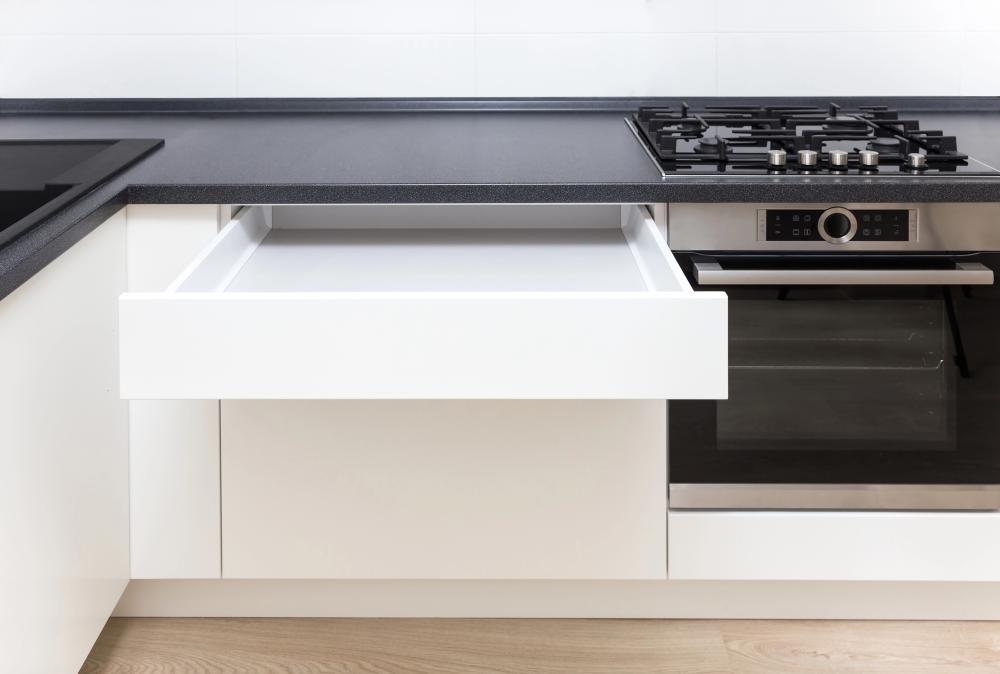
The cabinet carcass determines the structural integrity of the kitchen system, while handleless kitchen doors are mainly decorative surfaces. The cabinet holds hinges, runners, appliances, and the rail system, so it carries the load every day.
If cabinets flex, the rail alignment shifts and gaps between doors and drawers become uneven. This affects both functionality and appearance. Handleless kitchen cabinets rely on tight tolerances, so even small changes can affect how smoothly doors open.
Handleless doors can be changed later for a new style, colour, or material. You might start with white cabinets in a flat, then move to wood finishes in a house with a different lifestyle. The handleless system continues to work because the cabinet and rail remain in place.
The Hidden Risk: What Happens When Cabinet Quality Is Poor
A true handleless kitchen depends on precision. When cabinet quality is poor, problems do not always appear immediately, but they develop over time as the kitchen is used every day.
Low-quality cabinets can flex under weight, especially around drawers, integrated appliances, and tall units. When this happens, the aluminium rail system can become misaligned. Even a small shift affects how doors and drawers open, leading to uneven gaps, sticking panels, or a loss of that clean, continuous line that defines handleless design.
Common issues include:
- Doors and drawers are becoming misaligned over time
- Inconsistent gaps between units
- Rails feel uneven or uncomfortable to use
- Increased wear on hinges and runners
- A visible break in the continuous shadow line
Because the rail system is fixed to the cabinet carcass, any structural weakness directly affects performance. Unlike surface-level features such as doors or handles, these issues are not quick fixes.
This is why cabinet construction should be assessed early in the design process. High-quality handleless kitchen cabinets are built with rigid materials, precise manufacturing, and strong fixings that keep everything aligned over years of use.
Independent guidance on UK kitchen regulations notes that while there are no cabinet-specific laws, British Standards such as BS 6222-2 set performance guidelines for durable kitchen units and work surfaces.
In a true handleless kitchen, long-term performance is not just about how it looks on day one. It depends on how well the cabinet structure holds everything in place over time.
How Cabinet Engineering Creates a Sleek Look
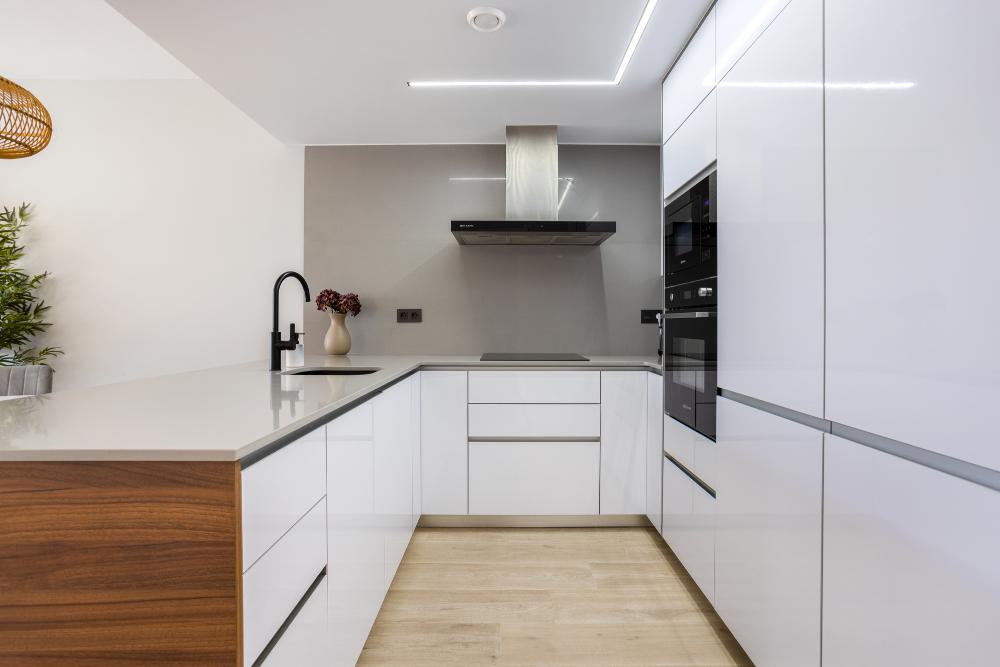
Handleless kitchen design emphasises minimalism and clean lines. The rail creates a continuous shadow line across cabinets, reducing visual noise and giving the room a furniture-like appearance.
Designers coordinate several elements:
- Cabinet heights and plinth levels
- Worktop thickness and overhang
- Alignment across base cabinets and upper cabinets
- Integration around appliances and tall units
This level of planning supports visual calm across the room. Lighting, materials, and surfaces work together to create a minimal, stylish space.
Why Door Style Plays a Smaller Role
Handleless kitchen doors work as flat surfaces that sit in front of the rail system. The door does not provide the grip, so its role is visual rather than mechanical.
You can choose:
- High gloss finish for a reflective, modern look
- Matt finishes with a softer light and fewer marks
- Wood veneers for warmth and texture
Each option suits different kitchen design preferences. The handleless system stays the same because the rail and cabinet provide access.
How to Check You Are Getting a True Handleless System
Many homeowners see a similar look and assume all handleless kitchens are the same. You can confirm a true handleless system by checking the cabinet structure.
Ask the designer:
- Is the rail integrated into the cabinet carcass?
- Can I see a cabinet with the aluminium rail fitted?
- Are rails used on all units, including tall cabinets and appliances?
Check your quote for terms like ‘handleless cabinets’ or ‘handleless rail system’. If the design allows you to add handles later without changing cabinets, it is not a true handleless system.
Practical Considerations for Daily Use
Ergonomic kitchen design improves usability and comfort. Rail position affects how easily most people can open doors and drawers throughout the day.
Other points to consider:
- Appliances require correct spacing and ventilation
- Rails should not interfere with sockets or lighting
- The channel should be easy to clean along the edge
- Grip depth should feel comfortable for fingers
A well-designed handleless kitchen balances style, access, and long-term use.
Frequently Asked Questions
Do handleless kitchens cost more than traditional kitchens?
Yes, true handleless kitchens are usually more expensive due to the integrated aluminium rail system and the need for more precise cabinet manufacturing. However, the cost reflects improved durability, alignment, and a more premium overall finish.
Are handleless kitchens suitable for family homes?
They can work well in family homes, but it depends on the layout and usage. The continuous rail system is easy to use, though fingerprints and marks may be more visible on certain finishes. Choosing matt or textured surfaces can help reduce maintenance.
Can you retrofit a handleless rail system to existing cabinets?
No, a true handleless system cannot be retrofitted. The rail must be built into the cabinet carcass during manufacturing. Existing kitchens can only achieve a similar look with alternatives such as J-pull doors or push-to-open mechanisms.
Final Thoughts: Choosing the Right Handleless Kitchen
A true handleless kitchen requires a rail system integrated into the cabinet carcass, and that system defines how the kitchen works every day. Cabinet quality impacts durability and lifespan, while doors shape the visual style.
Focus on:
- Cabinet construction and materials
- Rail design and alignment
- Ease of opening doors and drawers
- How the layout suits your space and lifestyle
Want expert advice on handleless kitchens? Come and see it in person at either of our showrooms.
Sheffield: Visit Sheffield Kitchen Outlet or call 0114 233 8975.
Leeds: Visit SKO Leeds or call 0113 487 4444.
See how it works on real units, compare ideas, and talk through your next kitchen.
Explore ways to buy

 LinkedIn Profile